Adaptation genomics, plasticity and environmental change
Ongoing projects
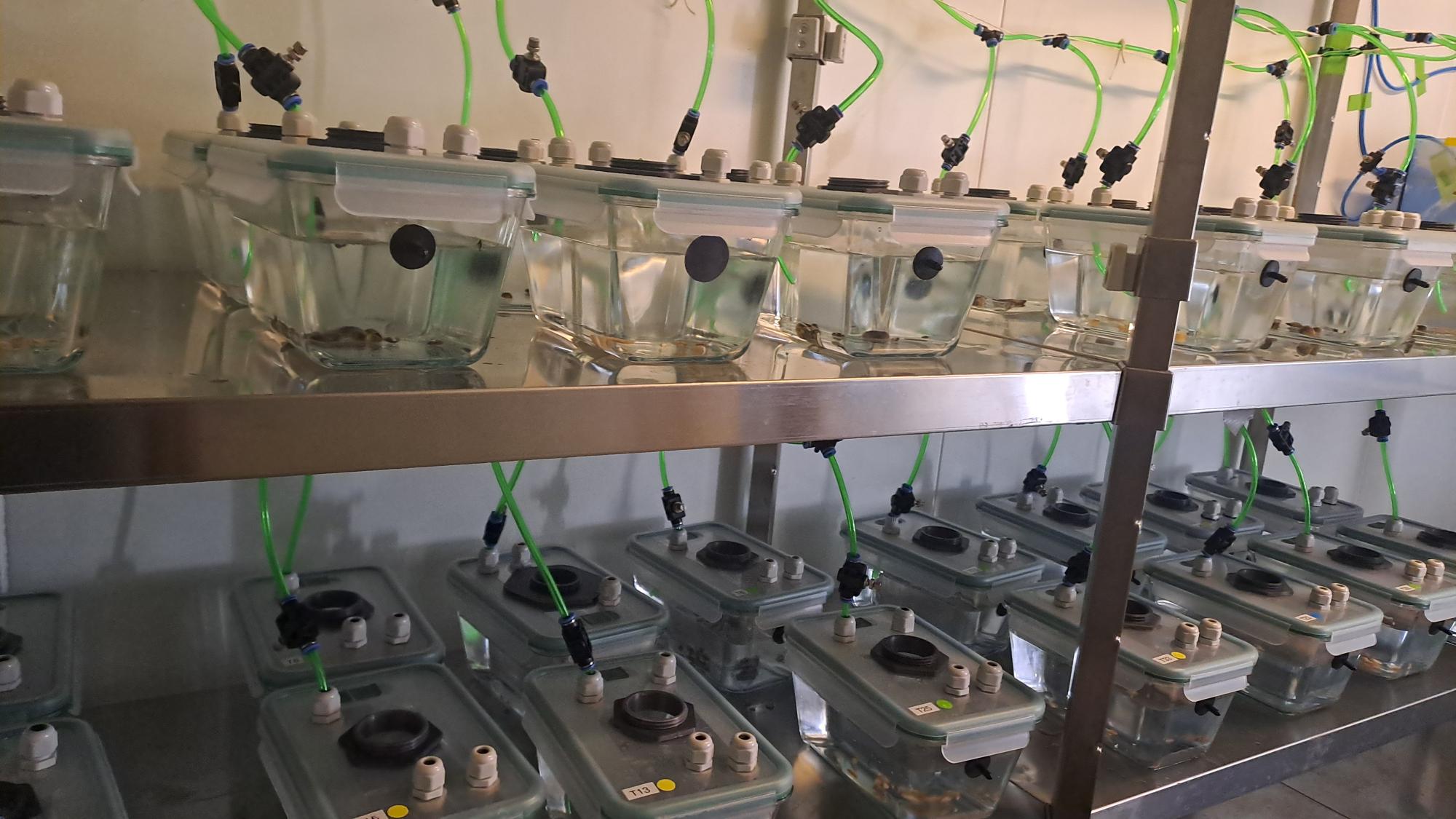
How will the invasive Quagga mussels develop in a changing lake?
The invasive Quagga mussel (Dreissena bugensis) has established populations in several Swiss lakes and rivers over the past decade. It shows remarkable ecological breadth, colonizing hard and soft substrates from shallow waters to depths exceeding 300 m. Two distinct ecomorphs occur across depths: the shallow (typical) form and the deep-water profunda form, found from 20–30 m depth in Lake Constance. Climate change is expected to alter temperature, oxygen levels, and food availability in Swiss lakes. Understanding how Quagga mussel ecomorphs respond to these changes is therefore essential for predicting their future population dynamics and ecosystem impacts. This project combines field -omics data, morphometric data, experimental data, and environmental analyses to assess the adaptive capacity of Quagga mussels in changing environments.
Team: Joana L. Santos, Antonia Zuber, Pascal Bucher, Sophie Kessler, Julie Conrads, Marco Giulio, Alexandra Weber
Main collaborator: Piet Spaak
Funding: SeeWandel-Climate; Interreg
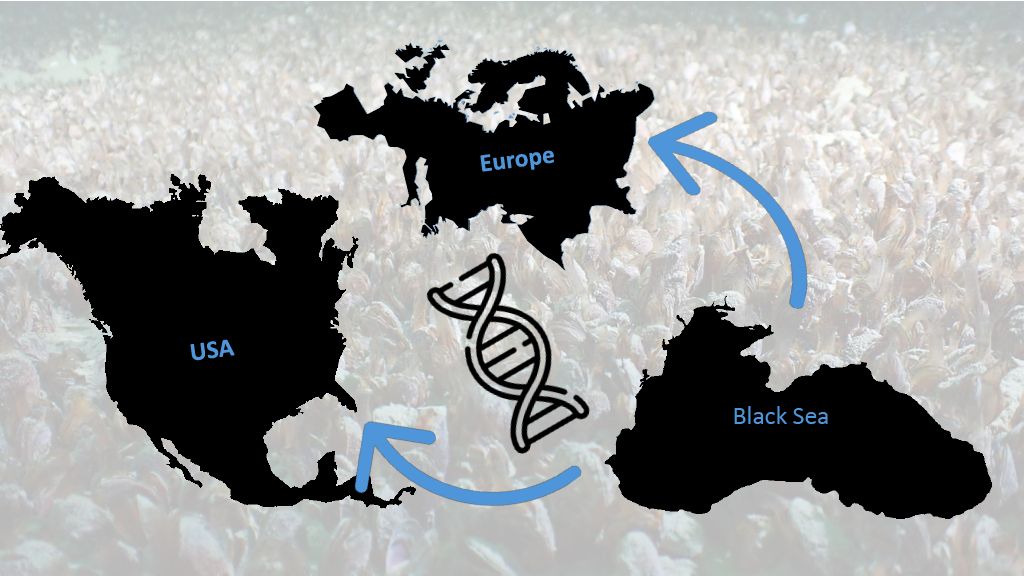
Reconstructing global invasion pathways of the Quagga mussel
The quagga mussel (Dreissena bugensis) is one of the most impactful aquatic invaders worldwide, yet its invasion history and evolutionary dynamics remain incompletely understood. In this project, we use whole-genome data from more than 600 individuals sampled across the species’ native range and its entire invaded distribution, including dense sampling across Switzerland, to reconstruct global and regional invasion pathways. Our goal is to identify sources of introductions, routes of spread, and signatures of rapid adaptation during invasion by combining demographic modelling with genome-wide analyses of selection and genome-environment associations. This work provides a genomic perspective on biological invasions and informs risk assessment and management of invasive species in freshwater ecosystems.
Team: Julie Conrads, Marco Giulio, Alexandra Weber
Main collaborators: Jonathan Marescaux, Lyubov Burlakova, Alexander Karatayev
Funding: Eawag Discretionary Funds
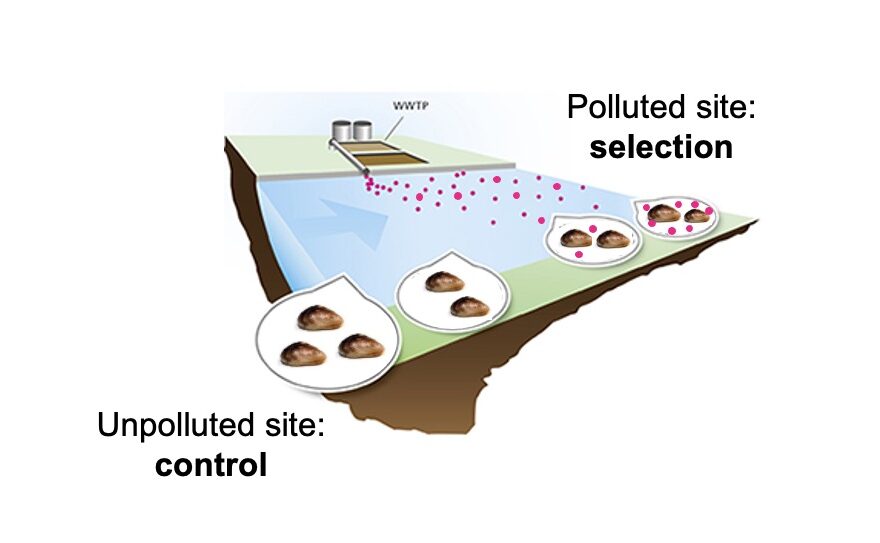
Molecular signatures of exposure to wastewater effluents in Quagga mussels
Treated wastewater effluents can still contain complex mixtures of micropollutants that are not fully removed during treatment and may affect freshwater organisms. In this project, we investigate the molecular signatures associated with chronic exposure to wastewater effluents in the invasive quagga mussel (Dreissena bugensis). Focusing on three paired populations sampled upstream and downstream of wastewater treatment plant outlets in the Rhine and Rhône catchments, we integrate whole-genome, epigenomic, and transcriptomic data generated from the same individuals. This project aims to identify reproducible genomic, epigenomic, and transcriptional patterns linked to putative micropollutant exposure by comparing molecular profiles between exposed and control populations. Overall, this work will provide a molecular framework for assessing sublethal impacts of chemical pollution in freshwater ecosystems.
Team: Giulia Pacinotti, Joana L. Santos, Marco Giulio, Alexandra Weber
Funding: Eawag Discretionary Funds
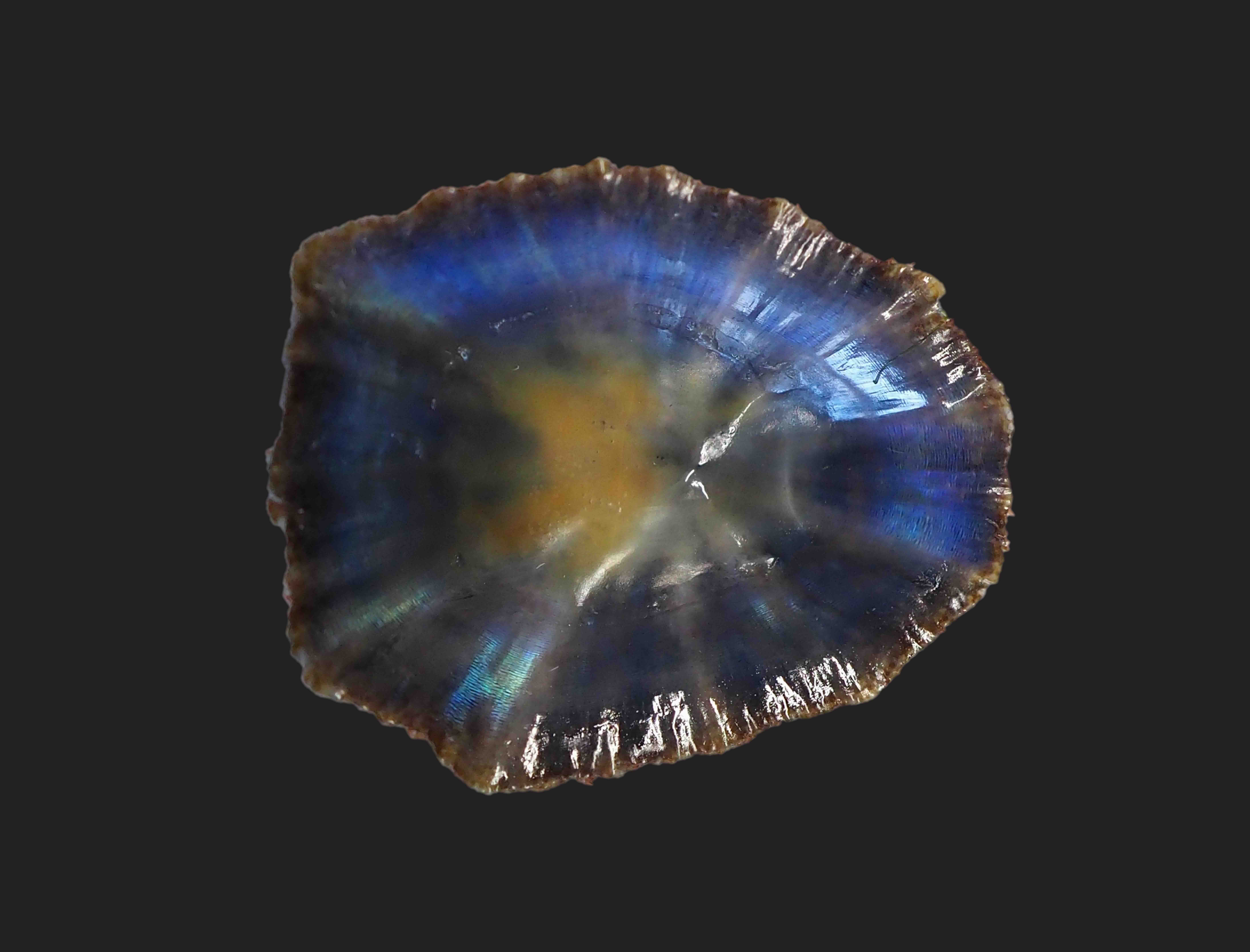
(Epi)genomic responses to natural ocean acidification in Patella limpets
This project investigates how marine organisms respond to long-term environmental change by integrating genomics and epigenomics across natural environmental gradients. Using two intertidal limpet species, Patella caerulea and Patella ulyssiponensis, we compare populations living near naturally acidified CO₂ vents with populations from nearby control sites. Specifically, we examine how molecular variation is structured across species, life stages, and environmental conditions by analysing whole-genome and DNA methylation variation in both adults and juveniles. This project leverages natural experiments to improve our understanding of genomic and epigenomic responses to chronic ocean acidification in marine ecosystems.
Team: Silvia Signorini, Joana L. Santos, Marco Giulio, Alexandra Weber
Main collaborator: Camilla Della Torre
Funding: Eawag Departmental Funds