Foundational biology of quagga mussels for management
Ongoing projects
Population dynamics of quagga mussels in Lake Constance

The quagga mussel (Dreissena bugensis) was first detected in Lake Constance in 2016 and has since rapidly expanded across the lake. Understanding how these populations grow and spread is essential to anticipate their ecological and economic impacts. Since 2021, Eawag has been conducting an annual lake-wide monitoring program across 54 sampling stations covering both shallow areas and the deepest parts of the lake. We quantify mussel densities, size distributions, and biomass using sediment grabs (Ponar sampler), and assess benthic coverage with the Benthic Imaging System (BIS). These data allow us to track population growth, understand how quagga mussels establish at different depths, and identify phases of expansion or stabilization. The monitoring provides the foundation for predictive models of quagga mussel population dynamics in Lake Constance. The results support evidence-based lake management, helping authorities and stakeholders anticipate ecosystem impacts and develop strategies for sectors affected by the invasion, including fisheries, drinking water infrastructure, and shoreline management.
Team: Linus Hofstetter, Thomas Müller, Joana L. Santos, Zoe Cristante, Alexandra Weber
Main collaborators: Piet Spaak, Anita Narwani
Funding: SeeWandel-Climate; Interreg
Publication: Hofstetter et al (2026) BioRxiv
Early population dynamics of the quagga mussel in Lake Zurich and impacts on biodiversity
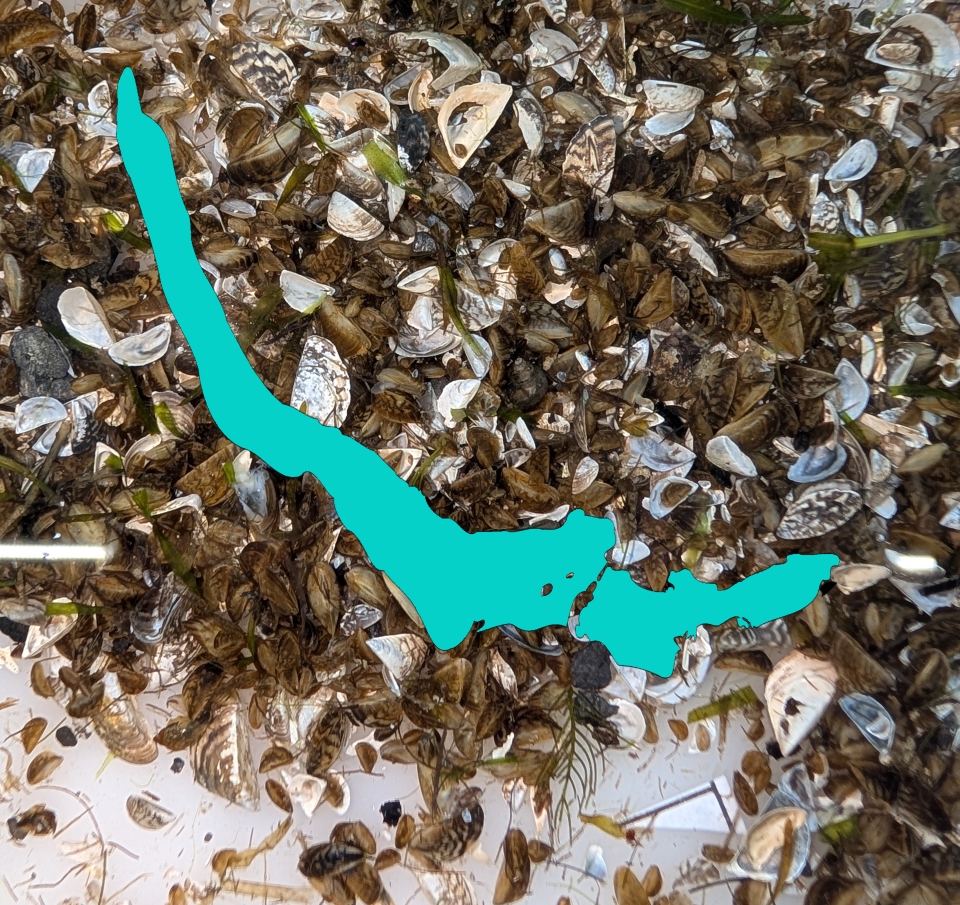
The quagga mussel was first detected in Lake Zurich in 2024 during a benthic macroinvertebrate survey. Remarkably, this discovery occurred at a very early stage of the invasion. Such early detections are rare because quagga mussels closely resemble the already established zebra mussel and are often only recognized once populations are well established. Since 2025, a standardized monitoring program combining sediment grabs (Ponar sampler) and benthic imaging (BIS – Benthic Imaging System) has been implemented to quantify mussel densities, biomass, and spatial coverage across the lake. In addition, we track the expansion of quagga mussels into deeper areas using semi-quantitative dredge sampling. Importantly, comprehensive surveys of benthic biodiversity conducted in 2024 provide a valuable baseline prior to major quagga mussel expansion. This allows us to directly measure how the invasion alters benthic communities over time. Because the invasion is still at an early stage, this project provides a unique opportunity to anticipate ecological impacts and support proactive lake management. We work closely with cantonal authorities to share results as the invasion unfolds, helping stakeholders adapt infrastructure, monitoring strategies, and ecosystem management in response to the rapid spread of quagga mussels.
Team: Julie Conrads, Silvana Käser, Thomas Müller, Christoph Walcher, Alexandra Weber
Main collaborators: Jukka Jokela, Patrick Steinmann
Funding: Eawag Discretionary Funds
Physiology and reproduction of quagga mussels across depth and seasonal gradients
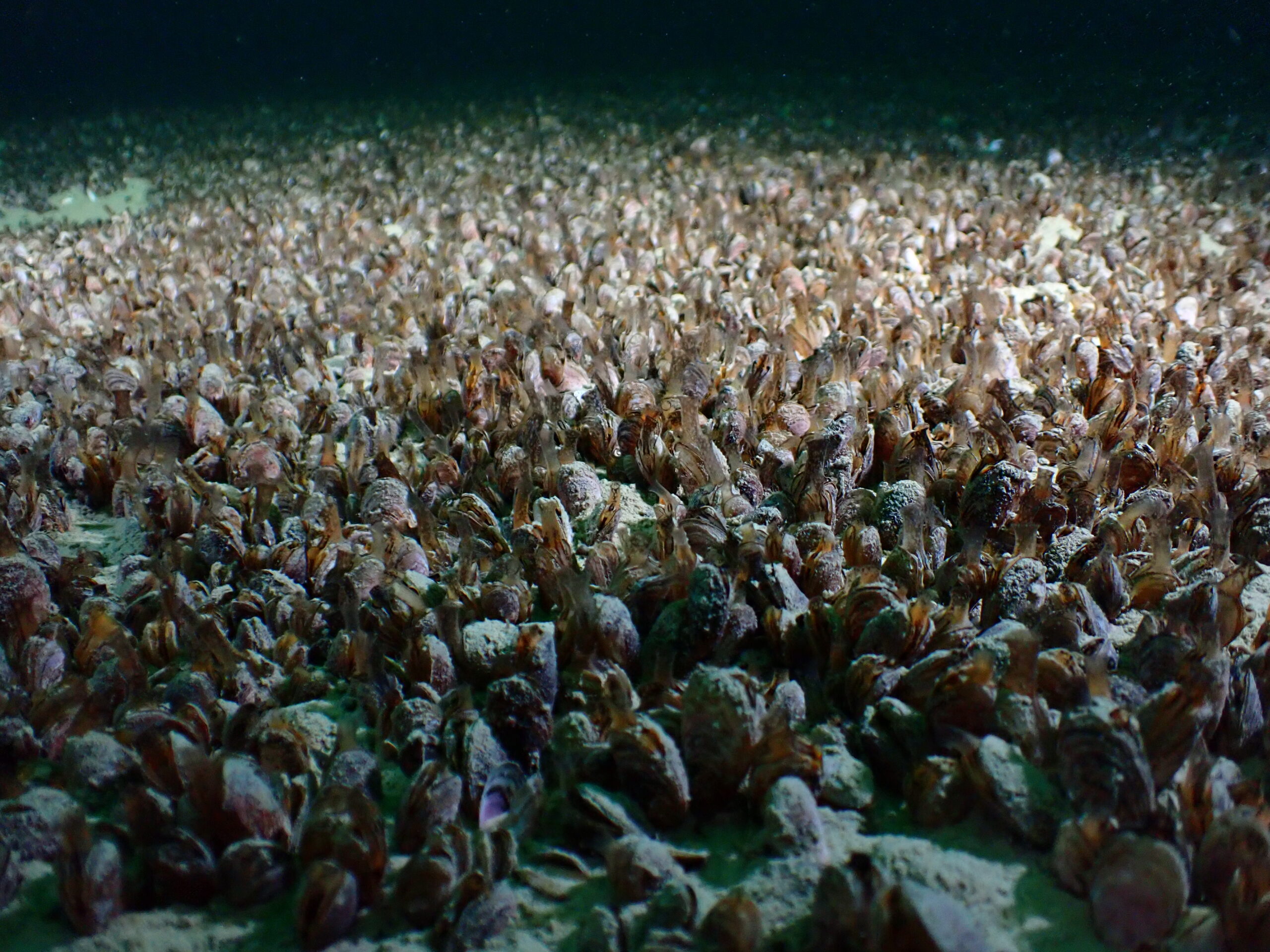
Unlike many invasive species, the quagga mussel colonizes not only shallow lake habitats but also deep-water environments exceeding 200 meters. Despite their increasing abundance in deep lake basins, little is known about the physiological and reproductive strategies that allow these populations to persist under cold, stable and food-limited conditions. In Lake Constance, we conduct monthly sampling along a depth gradient from the shoreline to 250 meters. We assess reproductive activity by analyzing gonad development across seasons and depths. In parallel, we quantify physiological condition by measuring energy reserves and biochemical condition, including glycogen content and nutrient stoichiometry (e.g. phosphorus content). This work aims to better understand how quagga mussels function ecologically in deep lake habitats. By improving our understanding of the biology of the deep-water profunda morph, we can better predict population growth and ecosystem impacts in large lakes. These insights are important for lake monitoring and management, as quagga mussels can strongly influence nutrient cycling and energy flow in lake ecosystems. Understanding their physiological performance and reproduction across depth helps anticipate how their populations may expand and how they may affect ecosystem functioning over time.
Team: Julie Conrads, Christoph Walcher, Alexandra Weber
Funding: Eawag Discretionary Funds
Foundations for potential genetic biocontrol of Quagga mussels
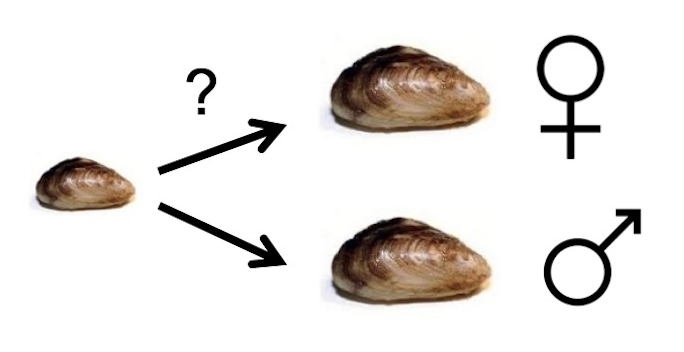
In addition to altering food webs and biodiversity, dense quagga mussel populations create substantial costs for water infrastructure, including drinking water treatment plants, hydropower facilities, and industrial cooling systems. Current management strategies mainly focus on monitoring and local mitigation, and effective long-term control options remain limited. This research direction explores the scientific foundations required for potential genetic biocontrol approaches that could reduce or regulate quagga mussel populations in the future. A key focus is understanding the sex determination system of quagga mussels, which is essential for evaluating strategies that could alter population dynamics, such as approaches based on sex-ratio distortion. To support future functional research, we are also working on establishing reliable laboratory rearing and breeding protocols for quagga mussels, which are currently not well developed. In parallel, we aim to develop and test molecular and functional tools that could enable experimental studies of gene function and reproductive biology, including approaches such as RNA interference and genome editing. By building the fundamental biological knowledge and experimental tools required to manipulate key traits such as reproduction, this work lays the groundwork for evaluating innovative and environmentally responsible control strategies. Such approaches could ultimately complement existing management tools and help mitigate the ecological and economic impacts of quagga mussel invasions.
Team: Silvana Käser, Marco Giulio, Alexandra Weber
Main collaborators: Yale Passamaneck, Kevin Kocot
Funding: Eawag Departmental Funds
Publication: Weber et al (2026) BioRxiv.
Completed project
Passive eDNA sampling for early detection of aquatic invasive freshwater bivalves
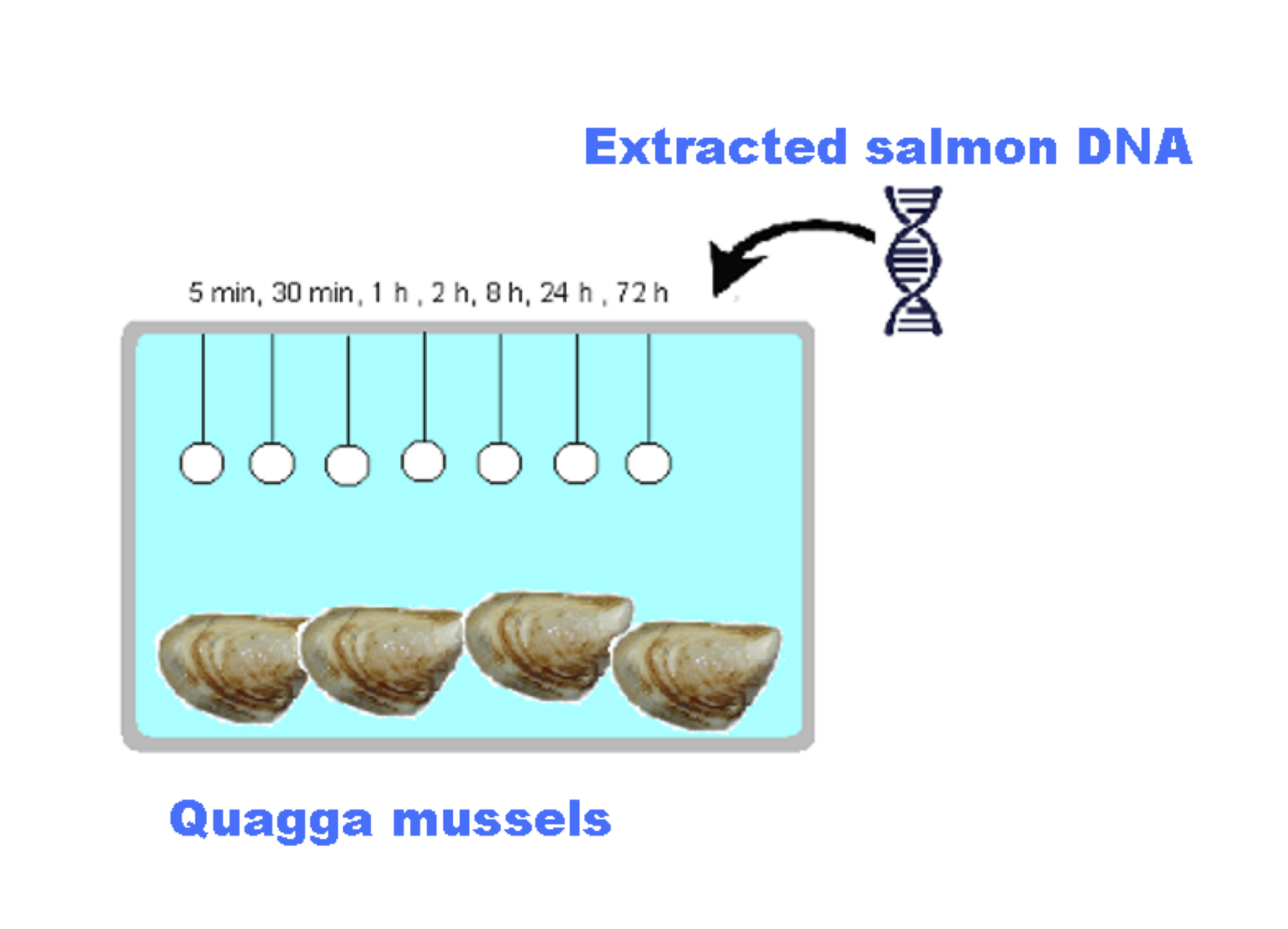
Early detection is critical for managing aquatic invasive species such as quagga mussels (Dreissena bugensis), zebra mussels (Dreissena polymorpha), and Asian clams (Corbicula fluminea). In Switzerland, active environmental DNA (eDNA) sampling is already widely used for monitoring these species and often detects their presence before mussels are observed in the field. However, detection typically occurs only once populations have already reached substantial densities. This project explores whether passive eDNA sampling can improve the early detection of invasive bivalves. Because bivalves are filter feeders that continuously release cellular material into the water, they may be particularly well suited for detection using passive samplers that are expected to accumulate DNA over time. We are conducting controlled experiments to evaluate how eDNA accumulates on passive sampling membranes. Specifically, we assess when membranes reach saturation, how long does DNA bind to the membranes, and investigate which forms of eDNA are captured, including dissolved DNA, membrane-bound DNA, and DNA adsorbed to particles. By evaluating and developing improved detection methods, this work contributes to more effective monitoring and early warning systems for invasive species, helping lake managers and authorities detect invasions earlier and respond more strategically.
Team: Anish Kirtane, Alexandra Weber
Funding: Eawag Departmental Funds & ETH Zürich
Publication: Kirtane & Weber (2026) BioRxiv